

A founder’s journey from independent specialist to group-wide solution partner
Background: From a Leeds garage to a trusted orthopaedic partner
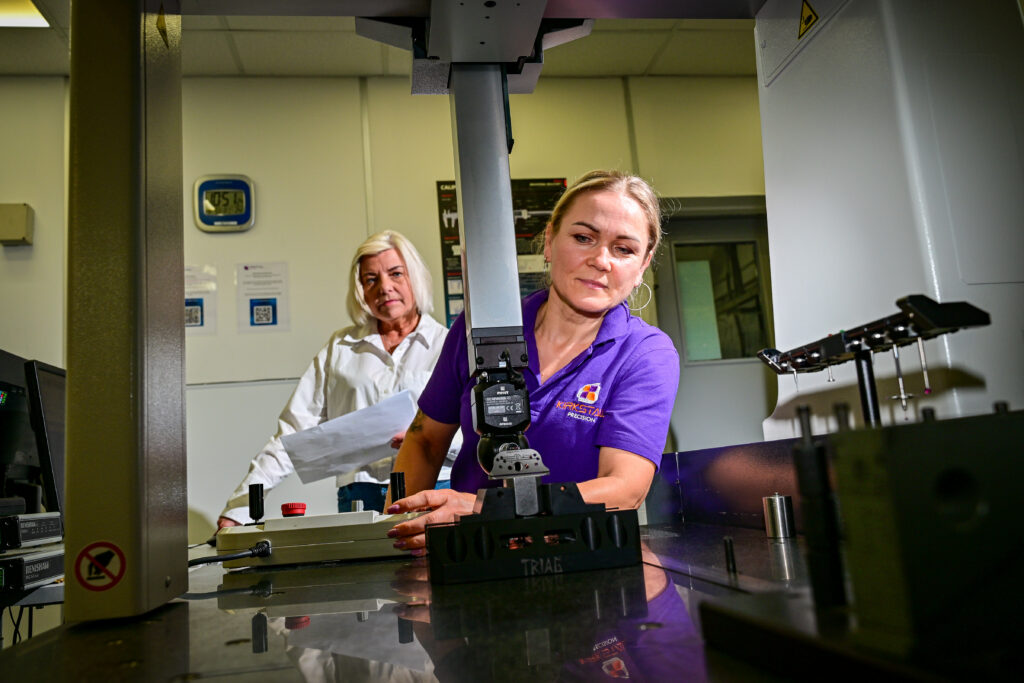
Kirkstall Precision began life in 1988 when engineer and inventor Wynn Ravenscroft started a small business in his garage in Leeds. With a handful of manual machines and a passion for solving complex problems, he built a reputation for creating bespoke jigs, fixtures, and special-purpose equipment for demanding customers.
A few years later, Adam Thornton’s father joined the business and helped move it into its first industrial unit in the Kirkstall Valley, close to DePuy Synthes and other medical device manufacturers. That relocation proved pivotal. Proximity to major orthopaedic customers opened the door to medical work, initially through jigs and fixtures, then increasingly through complex instrumentation.
Over time, the business invested steadily in milling, turning, welding, and finishing so that it could deliver complete engineering solutions. By the mid 2010s, Kirkstall Precision had evolved into a highly capable precision engineering firm with a growing presence in orthopaedics and other regulated sectors.
A rigorous supplier audit by Johnson & Johnson in 2016 marked a turning point. Rather than view it as a setback, Adam and the leadership team treated it as a roadmap for transformation. They strengthened quality and regulatory systems, restructured the team, and refocused the business on medical customers. By the time Kaleidex came into the picture, Kirkstall had more than doubled revenue and headcount since Adam’s MBO in 2017, and around 90 percent of its work was in medical.
“When you are doing low volume jigs, fixtures, and special machines, the engineering skill is already high. Our real transition was regulatory. We invested heavily in QA and QC so that we could become a fully fledged medical contract manufacturer.”
Looking ahead: investment, regulation, and the next chapter
By 2022, Kirkstall Precision was a successful, fast-growing business with a strong reputation in orthopaedic instruments. At the same time, the demands on a family-owned company in a regulated sector were increasing. Regulatory expectations were rising, investment requirements were growing, and key customers were signalling that they would consolidate their supply base and rely on fewer, more capable partners.
Adam began exploring what the next 5 to 10 years should look like. He wanted to:
- Secure the long-term future of the company and its people
- Keep building in medical rather than being absorbed into a broader industrial group
- Access the investment required for further growth, particularly in equipment, systems, and people
With help from EY in Leeds, he spent more than a year talking to potential investors and acquirers. Options ranged from sector-agnostic private equity to large aerospace and oil and gas groups looking to “buy into” medical.
“As a small, privately owned business, the level of investment needed each year was getting harder to sustain. We wanted to give the company the best chance of long-term success, but we were very conscious about who we did that with.”
One theme quickly emerged. Many industrial buyers saw Kirkstall as a way to bolt on medical capability, then fold it into a much larger non-medical organisation. For Adam, that created a real risk that the culture, history, and specialist focus of Kirkstall would be diluted over time.
Meeting Kaleidex: a shared vision for specialist medical manufacturing
In June 2023, at a MedTech show, Adam was on the Kirkstall stand with a selection of complex orthopaedic instruments on display. That is where he met Peter from Kaleidex.
Peter picked up one of the most challenging instruments and asked a simple question: “Do you make these?” That conversation was the start of a deeper dialogue about what Kirkstall had built, where the sector was heading, and what a joined-up “solution provider” for medical OEMs could look like.
As discussions progressed, several things stood out:
- Kaleidex was building a group focused purely on medical devices, not a general industrial conglomerate
- The model was to unite specialist businesses under a group umbrella while keeping local leadership and identity
- The vision of a distributed network of design, machining, tooling, and assembly capability matched exactly what Kirkstall’s customers were asking for
“We were being told by our key customers that they would review their supply chains and consolidate. The Kaleidex vision of a specialist solution provider lined up with what we were hearing from the market. It felt like we were pulling in the same direction.”
Crucially, Kaleidex did not want to move Kirkstall into a non-medical parent or strip out what made it distinctive. The intention was to invest behind the existing strengths of the business, connect it with complementary capabilities across the group, and position it as a core orthopaedic hub within a broader medical platform.
“With some industrial buyers, there was a strong chance that all our history, culture, and values would just be swallowed up. With Kaleidex, you could feel the empowerment from day one. They appreciated our expertise and wanted to build around it, not over it.”
The deal process: transparent, efficient, and collaborative
Once heads of terms were signed, the transaction moved from early conversations into detailed due diligence and legal documentation. Adam chose a large law firm experienced in M&A, and they were frank in their feedback.
Having seen more drawn-out and contentious processes, the lawyers were impressed by the structure and approach of the Kaleidex and Ansor team. They commented on the clarity of information requests, the willingness to discuss issues directly, and the overall pace and cost of the process relative to other deals of a similar size.
“I have only been through one transaction, so I do not have multiple deals to compare. What I can say is that my legal team were genuinely impressed by how the process was run. It felt fair, honest, and transparent.”
Kirkstall completed its sale to Kaleidex in July 2024. For Adam, the proudest moment of his career came shortly after: the combination of completing the deal, delivering a demanding robotic instrument project with 20 percent growth, and doing so during a period when his managing director colleague faced serious health issues.
“Getting over the line, while still delivering for our customers in a very challenging year, was the proudest moment of my working life.”
Life as part of Kaleidex: investment, people, and new opportunities
The impact of joining Kaleidex was felt quickly inside the business. Within a month of completion, Kirkstall took delivery of a new state of the art five axis machining centre, followed later that year by the latest EDM technology. Both investments had been discussed during the deal, but seeing them follow through so quickly sent a strong signal to the team.
“The month after completion we took delivery of a new five axis machine, then invested again in EDM later in the year. It created a real buzz. People could see that the commitment to invest was real, not just words on a slide.”
In 2025, the focus broadened to people and processes. A group operations director began spending time on site, new KPI frameworks were introduced, and two senior roles were created at Kirkstall: an operations lead and a site leader. That allowed Adam to move out of the “owner manager wearing every hat” role and concentrate on what he does best: working with customers, developing new opportunities, and helping shape the wider group.
“After twelve months, we agreed that my skill set was best used on the commercial side and customer base. Bringing in senior leaders on site means Kirkstall can keep developing to the next level, while I also start a new career path within the group.”
For employees, the change has combined continuity with new prospects. The Kirkstall brand, site, and culture remain intact, but the team now has access to group-level support, shared knowledge, and the chance to work on larger, more complex programmes that would have been harder to secure alone.
Join our growing network…
“Working with Kaleidex during our acquisition process was an incredibly positive experience. From start to finish, their team demonstrated exceptional professionalism. The outcome exceeded our expectations, and we truly believe that their expertise has positioned us for future growth. We could not have asked for a better partner during this transition! We are immensely proud to be a part of Kaleidex and achieve greater success together.”
Adam Thornton
Director, Kirkstall Precision
Founder reflections: a second wind and a longer horizon
Looking back, Adam describes the decision to join Kaleidex as giving him a “second wind”. The intense focus on the first 12 months post-deal, and on the earn-out period, has now given way to a broader view of the next five years and the role Kirkstall will play in a wider group.
“I feel like I have that feeling again from when I signed for the company in 2017. Back then I was younger and maybe a bit more naïve, but I had clear goals. Now I have a new set of milestones, a stronger platform, and a group vision to aim at.”
He is also clear about how he would describe Kaleidex as a partner.
“From the start, Kaleidex have been honest, caring, and ambitious. They are dedicated to creating something unique, and needed, in medical contract manufacturing.”
Advice to other founders
For owners thinking about selling or bringing in investment, Adam’s advice is to be clear on what matters most and to test potential partners against those priorities.
“You will get the chance to work with a very talented group of like-minded business owners who are passionate about their businesses, their people, and the sector. If that is what you are looking for, Kaleidex is a serious partner to consider.”
He encourages founders to ask detailed questions about culture, autonomy, and investment, not just headline valuation. The right buyer should understand the business, respect its history, and provide a credible platform for long-term success.